

In Bloom
U2 releases their second surprise EP of the year, once more aligned with the liturgical calendar and featuring some of their strongest work in years. Plus: Jessie Ware returns.

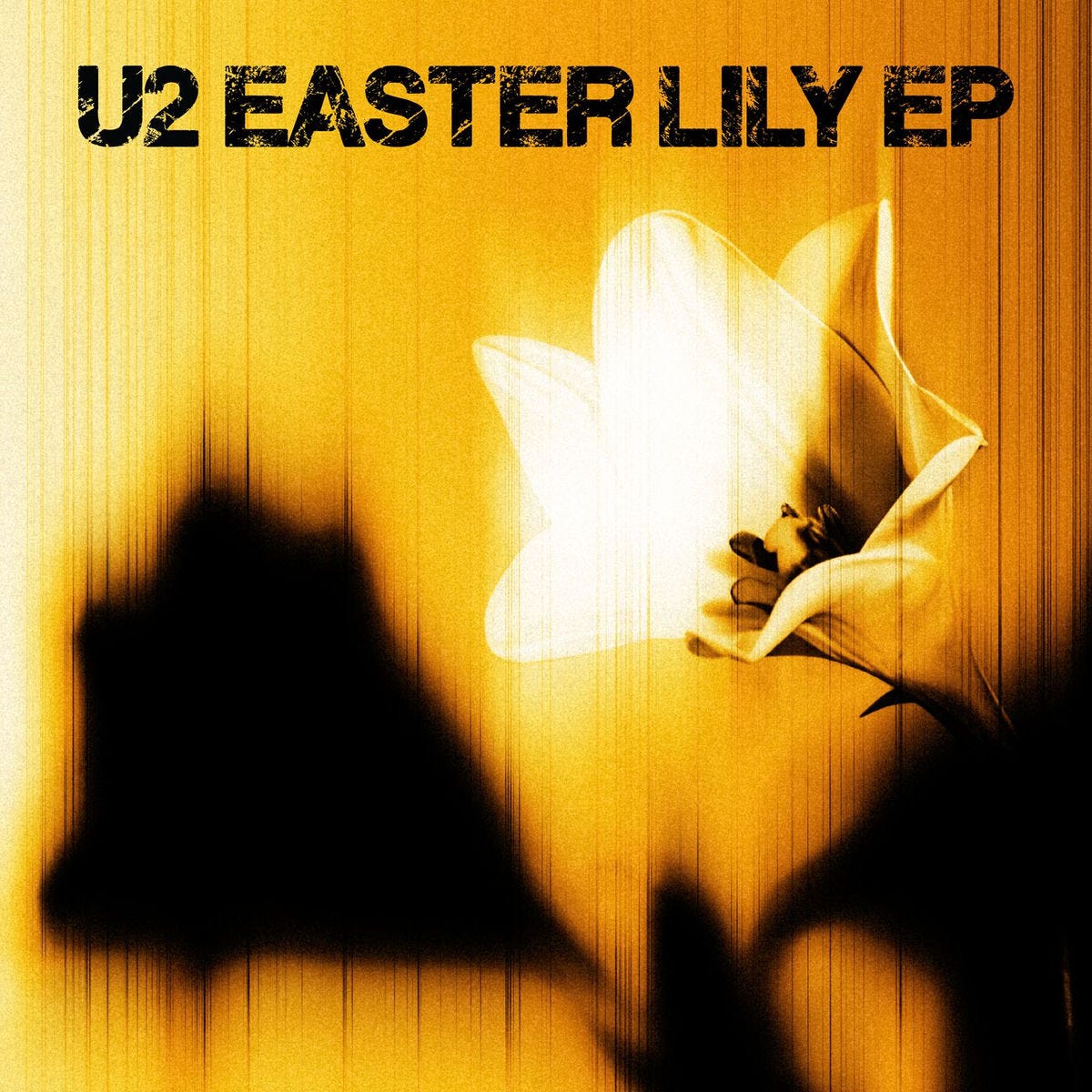
U2 - Easter Lily
For years Bono has promised, almost always falsely, that U2 is reconnecting with the punk records that first inspired them— seminal albums by The Ramones and The Clash. In 2026, they are finally making good on that promise, if not in sound then at least in sensibility. Following years of grueling recording schedules and constant analysis paralysis, the band has suddenly pivoted to releasing music quickly and without much second-guessing, just like they did back in the quickfire era of Boy, October, and War. Between the surprise drops of Ash Wednesday and now Easter Lily, U2 have sprung a couple of new EPs, both connected to Christian liturgical seasons, totaling a dozen new songs and about an hour of music.
That music is mostly solid, give or take one Ed Sheeran team-up, and Easter Lily is particularly strong. Though it never quite reaches the highs of “The Tears of Things,” an epic Ash Wednesday standout, song-for-song it’s the most consistent and assured music they’ve made in ages. The rush-release strategy is paying off: across Easter Lily U2 allows themselves to just be U2, leaning into the things they do well without feeling self-conscious or overly studied.
Following years of trying to be all things to all people, sweating and straining to be both a rock band of political import and a pop group with a big cultural footprint, U2 almost sounds like they are making records just for the faithful. It suits them: Easter Lily is full of guitars that chime and surge, just the way they did back on the early records, and songs that are unashamedly earnest. Produced by Jacknife Lee, who also helmed Ash Wednesday, these new songs include just a few gestures toward the digital age, the occasional rush of synths marking this as a post-Achtung U2 record. The only sonic flourishes that don’t work are the few garish and frankly inexplicable shadings of AutoTune. As if Bono, the son of an opera singer, needs it. (Bill Callahan is right: “Autotune? I don't wanna hear it/ That's just prepping us/ To be satisfied, being sung to by something without a spirit.”)
Thematically, the new songs are both distinguished from and complementary to the ones on Ash Wednesday: where that album addressed wars and rumors of wars with prophetic lament, Easter Lily is more concerned with interpersonal relationships and reconciliation. The inward focus brings out some of the group’s most overt spirituality, with resurrection hope being the animating force behind “Easter Parade” and “Resurrection Song.” In the former, Bono shouts praises to God in Latin, a high church flourish he hasn’t allowed himself since October. In “Scars,” what seems at first like a fairly routine sentiment— scars are what make us who we are, scars are beautiful because they evidence a life well-lived, etc.— takes on added depth when the song shifts toward the perspective of the scarred and risen Jesus.
U2 remains firmly committed to big gestures; leave it to them to title a song “In a Life,” and build to one of those euphoric choruses that justifies that grandiose title. By panning out and taking the big-picture view of a human life, touching on relational friction as well as global violence, the song arrives at a place of grace and humility: “I feel alone/ I need it known/ I never achieved anything on my own.” Smaller in scale but no less moving is “Song for Hal,” the EP’s opener. Sung by The Edge and dedicated to the late Hal Wilner, it features one of their most elegiac melodies. And how’s this for a send-off: “Did you know he is close to God/ He who makes his old friends laugh?/ Did you know Hal the magician?/ I watched him disappear from a photograph.”
It is good to hear U2 playing together, sounding as natural as ever, writing songs about things that matter without straining too hard for “relevance.” It’s also good to hear them take chances. Easter Lily ends with “COEXIST (I Will Bless the Lord at All Times),” which splits the difference between the stage show that Bono and Lee put together for the former’s book tour and U2’s own version of “Bohemian Rhapsody,” with the singer taking on different voices and dialects to inhabit different characters. If Bono bugs you, well, this is a lot of Bono, and it’s here that the Autotune is most indefensible. And yet, it is also one of the band’s most beguiling pieces of devotional music, a disarming stance of gratitude even in a world beset by violence. It’s the kind of earnestness that U2 usually does well— and throughout Easter Lily, it’s welcome.
My rating: 7.5 out of 10.
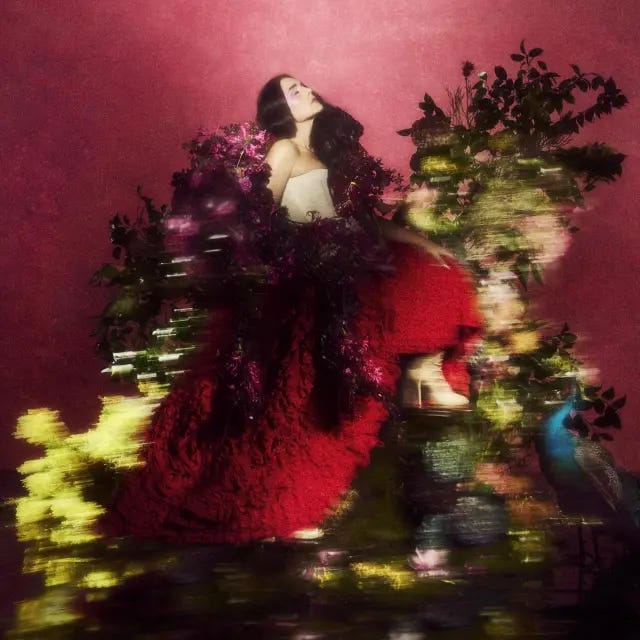
Jessie Ware - Superbloom
A new Jessie Ware album completes her trilogy of disco revival albums. The first in that series, What’s Your Pleasure?, is one of the best albums of the past decade. I like Superbloom less, though it’s not without its moments.
From my FLOOD Magazine review:
The LP may have an earthy title, but it continues the trajectory of each album in this trilogy feeling less grounded than the one that came before it. Ware, who has been married since 2014, fashioned What’s Your Pleasure? as a collection of middle-aged couple fantasies; though it sounded perfect for a night out, it had an undercurrent of domesticity, its passion seasoned with a winning sense of wholesomeness. That! Feels Good! followed, its decadent punctuation signaling a shift toward the arch and the campy.
The personality of Superbloom feels harder to parse, with much of the songwriting choosing a middle lane of generic sensuality. “Got you hot under the collar,” Ware sings on lead single “I Could Get Used to This,” “Pleasure’s just around the corner.” Later, on “Automatic”: “He lets me lead, he’s Mr. Right.” That same lack of heft is evident in the arrangements, which swirl with impeccable adornment and period-piece filigrees; the grooves are welcoming, but the smooth, shiny surfaces occasionally blend together. There’s less of an anchor here in rumbling bass or stabs of guitar, and fewer occasions for Ware to deviate from the record’s floating, made-for-wedding-receptions cheer.
Yet if Superbloom doesn’t assert itself quite as strongly as its predecessors, it has just enough highlights to feel like a worthy capstone and epilogue. Toward the end of the album, Ware does get personal (and returns to her roots in sophisticated balladry) with “16 Summers,” a domestic lament that brings a welcome addition of wistfulness to the album’s emotional palette. There’s certainly pleasure to be shared on “Sauna,” a steamroom-ready remake of Olivia Newton-John’s “Physical,” further proof of just how much Ware has metabolized her dance music lore. Best of all might be the slinky “Don’t You Know Who I Am?,” which finds Ware at her most romantic and playful: “Don’t you know who I am? I’m the love of your life!” She sounds fully in charge of the scenario, and it serves as confirmation of just how much she’s flourished in her dancefloor diva era.
Read the rest here. And give all three albums a listen— I recommend chronologically.
My rating: 6.5 out of 10.
Other recent favorites:
Flea, Honora
Twisted Teens, Blame the Clown
Julian Lage, Scenes from Above